
Virginia’s Don’t Tread on Me plate carries the coiled rattlesnake of the Gadsden flag on a yellow background. The design entered the state’s specialty catalog after the General Assembly authorized it in 2011, and the first sets reached drivers in April 2012. It is a registered Virginia plate, not a sticker or a decorative tag. The sections below describe how to order one, what the artwork includes, how the charges work at renewal, and where the process tends to stall.
The plate attracts two kinds of buyers: drivers who want the symbol on a modern vehicle, and collectors who track Virginia plate history. Both groups deal with the same DMV record, the same catalog entry, and the same production queue. A clear order depends on the vehicle class and the character choice, not on enthusiasm for the artwork. Read the order sequence before paying, then check the plate after it arrives.
How to Get or Apply for a Virginia Don’t Tread on Me License Plate
A Gadsden plate order attaches to a vehicle that already has a Virginia registration record, or to a registration opened in the same transaction. The plate is a specialty design, so the order combines the design choice with the vehicle’s registration term. Work through the vehicle class, the character choice, and the payment in that order. The points below follow the sequence a counter clerk or an online session will expect, which keeps a clean order from being returned for a missing detail.
Official source:
https://www.dmv.virginia.gov/vehicles/license-plates/search/dont-tread-me
Check the Vehicle and the Plate Class
Specialty designs are listed by vehicle class, and a passenger-car plate does not automatically fit a motorcycle, trailer, or heavy truck. Look up the design in the DMV catalog and confirm that the class shown there matches the vehicle on your registration. A mismatch is the kind of error that surfaces only after payment, when the plate cannot be produced for that record. Confirm the class before you choose characters or pay anything.
- Vehicle class. Match the catalog entry to the registration.
- Registration status. Active, or opened in the same visit.
- Design code. Carry the code, not just the plate name.
- Eligibility note. Read the full entry, not the picture alone.
Decide Between Assigned Characters and a Personalized Message
Every specialty plate can be issued with an assigned number, and many designs accept a personalized message for an added yearly charge too. The catalog entry states whether the Gadsden design takes personalized characters. If it does, prepare more than one option, since a string can be refused if another owner already holds it or if it fails the review rules. A backup choice keeps the order moving on the first attempt.
Place the Order Through DMV
Orders move through DMV’s online services, a customer service center, or a mailed application, depending on the path offered for the plate. An online session is fastest when the registration is current and the address on file is correct. A counter visit helps when the vehicle record needs a correction in the same trip. Either way, keep the order confirmation number, since it ties later questions to the right transaction.
Pay the Design Charge With the Registration
The specialty design charge is paid with the registration term, and a personalized message adds its own yearly amount. The exact figures sit in the fee table below rather than in this paragraph, and the pattern matters: some designs charge each year and others charge once. Ask the clerk or read the checkout screen to see which pattern the Gadsden plate uses, then confirm what the total covers before paying.
Mount the Set and File the Receipt
Passenger cars in Virginia carry two plates, one at the front and one at the rear, and the new set should go on as soon as it arrives. Keep the current plates or the temporary tag valid until then. Store the receipt, the registration card, and the order confirmation together, and photograph the mounted plate. That file answers a renewal question, supports a replacement request, and proves the design charge if a notice ever looks wrong.
- Order confirmation. The number ties a later question to the right transaction.
- Receipt showing the design charge. It settles a renewal dispute fast.
- Registration card. A copy in the folder backs up the one in the vehicle.
- Photo of the mounted set. It shows the plate was installed correctly.
The Gadsden Design and How It Reached Virginia Roads
The plate is a state product with a political symbol at its center, and that combination accounts for both its appeal and its history. Virginia authorized the design in 2011, and production followed in April 2012. The artwork borrows from a flag drawn in the 1770s, but the plate itself is a modern specialty item with a catalog code and a fee line. The sections below separate the symbol from the registration product.
What the Yellow Plate Shows
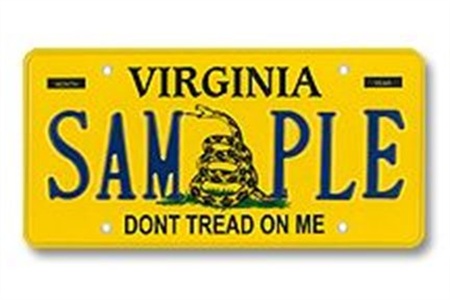
The background is yellow, and a coiled rattlesnake sits at the center, with the Gadsden motto displayed as part of the design. The state name and the plate number stay readable at a distance, since the artwork has to work as an official tag rather than a poster. The palette is unusual among Virginia designs, most of which use blue, white, or a scenic image, though the black antique plate departs from that pattern too. That contrast is a large part of why the plate is easy to spot in a lot.
Authorization in 2011 and Release in 2012
Virginia authorized the Don’t Tread on Me plate in 2011, and the first sets were released in April 2012. The gap between authorization and delivery is normal for specialty plates, since artwork, production, and catalog setup all take time. Drivers who ordered during that window waited for a plate that did not yet exist in inventory. The dates matter to collectors and to anyone checking whether an early plate is genuine.
Adoption Numbers and Popularity
By early 2014, more than 24,500 passenger-car versions of the plate were on Virginia roads, and the design ranked among the state’s top ten vanity plates. Those numbers put it in rare company for a plate that had been available for less than two years. Volume affects production and renewal too, since a popular design stays in the catalog and rarely faces retirement. A high count is a practical sign that the plate will remain orderable.
Why Drivers Choose the Design
Buyers pick the plate for the symbol, for the color, or for both. Some want a historical reference on a modern car, and others simply like a yellow plate on a dark vehicle. The design works as a statement, and it does not require a bumper sticker. Since it is an official plate, it carries the same legal weight as any other Virginia tag, which is part of the appeal.
Don’t Tread on Me vs Other Virginia Specialty Plates
A specialty plate decision usually comes down to two or three candidates, and the comparison is rarely about artwork alone. Fee pattern, eligibility, and personalization separate designs that look equally easy to order. The Gadsden plate is open to registered owners and carries a message built into the background, which distinguishes it from plates tied to a group or a service record. The table below sets the broad differences, then the sections describe each row.
| Point | Don’t Tread on Me | Other specialty designs |
|---|---|---|
| Artwork | Yellow background with a coiled rattlesnake | Scenic, collegiate, military, or cause art |
| Message | Motto built into the design | Often carried by the artwork or a logo |
| Eligibility | Open to a registered Virginia vehicle | Some designs require proof of service or membership |
| Personalization | Available when the catalog allows it | Varies by design |
| Fee pattern | Set by the specialty schedule | Yearly or one-time, design by design |
| Production | Made after the order clears | Same production path |
Artwork and Message
The Gadsden plate puts its message in the background, so the plate reads as a statement even with an assigned number. Collegiate plates such as the Virginia Tech plate carry a school name, military plates carry a branch or an honor, and conservation plates carry an image. None of those designs need a personalized string to be understood. That built-in message is the main visual difference, and it is why the plate appeals to buyers who do not want to pay for characters.
Fee Pattern
All specialty designs draw from the same published schedule, but each design lands on one of its rows and follows either a yearly or a one-time pattern. Two plates with similar artwork can cost different amounts over a long registration as a result. The design charge is separate from personalization and from registration itself. Compare the pattern across the designs you are considering, not just the first invoice, since a yearly charge returns with every term.
Eligibility and Personalization
Some designs require a document before production: a service record, a membership card, or a medical certification such as the one behind disability plates. The Gadsden plate does not depend on membership in a group, which simplifies the order. Personalization is a separate question, and the catalog entry decides whether the design accepts it. A design that takes characters needs a unique string that passes review. Check both points before assuming two plates are equally easy to obtain.
Fees, Renewal, and Plate Upkeep
Money enters a plate order in three places: the design charge, the optional personalization charge, and the registration itself. Only the first two belong to the plate, and only the design charge differs from one specialty plate to the next. At renewal, the notice should repeat a yearly design charge but not a one-time one. The table lists the verified amounts, and the sections describe how each line behaves after the first year.
| Item | Current fee |
|---|---|
| Specialty plate, yearly design | $10, $15, or $25 per year |
| Specialty plate, one-time design | $10, $25, or $50 one time |
| Personalization | $10 per year |
| Plate transfer | $2 |
| Replacement plate | $10 |
| Replacement plate, permanent or trailer | $5 |
| Replacement decal | $1 |
What the Renewal Notice Should Show
A renewal notice for a yearly design should include the design charge alongside the registration amount. A one-time design should not appear again after the first order, and personalization should appear every term if the plate carries a message. Compare the notice with the original receipt before paying. If an unfamiliar line appears, ask DMV to describe it rather than assuming the charge is correct. A short question at renewal prevents a repeated overcharge.
Replacing a Lost or Damaged Plate
A lost, stolen, or bent plate needs a replacement rather than a repair. Report the loss, request a new plate, and keep the registration active during production of the new set. A damaged plate should not stay mounted, since a bent face can fail a toll reader or invite a stop. The replacement charge depends on the plate type, and a damaged decal is handled separately from a damaged plate. Keep the old plate until the replacement arrives.
Moving the Plate to Another Vehicle
A Virginia plate belongs to the owner, so the Gadsden design can move to another vehicle registered in the same name. The transfer is a DMV transaction with its own charge, and the registration record must show the new vehicle before the plate is mounted. The design keeps its fee pattern after the move. A plate cannot follow a sale to a new owner, who must order the design separately.
Surrendering the Plate
When a vehicle is sold, totaled, or taken off the road, the plate should be surrendered or moved rather than left on the car. Surrendering closes the plate record and protects the owner from liability tied to a tag that is still active. Bring the plate and the registration card to the transaction, and keep the receipt. A plate that stays with a sold car can return as a letter about tolls or a stop. A receipt proves the surrender date too, which matters if a toll bill arrives for a trip the car never made.
Ordering for a New Vehicle, a Move, or a Gift
A Gadsden order can join a larger transaction, and the surrounding paperwork changes the timing. A new resident needs a Virginia title and registration before the plate can be produced. A dealer sale or a gift adds a second person or a temporary tag to the sequence, and each one shifts who signs the form and who receives the confirmation. The sections below cover the three situations that cause the most questions at the counter.
New Residents and Dealer Sales
A new resident registers the vehicle in Virginia before ordering the design, using the out-of-state title, insurance, and a safety inspection. A dealer usually handles the title and the first registration, then issues a temporary tag. In both cases the plate order waits for a Virginia record, and the temporary tag covers the gap until the new set arrives. Keep the confirmation with the title paperwork, and remove the old-state plate once the Virginia registration is active.
Personalized Plates as Gifts
A personalized Gadsden plate can be ordered for a vehicle the recipient already owns and registers, but the order still runs through that vehicle’s record. The buyer needs the plate class, the registration status, and a character string that clears review. Gifting the design charge is simple; gifting a plate for a car that is not yet registered is not. Confirm the vehicle record first, then pay, and give the confirmation rather than a promise.
What Slows a Gadsden Order
Most delays come from four sources: a vehicle class that does not match the design, a registration that has lapsed, a personalized string that is already taken, and a payment that does not match the current schedule. Each has a fix, but each fix adds a stage. Read the catalog entry, check the registration, prepare a backup string, and confirm the total before submitting. A complete order avoids the queue that partial orders join.
Using the Plate on the Road
A specialty plate is still a legal tag, so the rules about mounting, visibility, and decals apply without exception. Virginia passenger vehicles carry a plate at each end, and the rear plate holds the registration decal. Frames and covers can turn a clean plate into a violation if they hide the state name or the numbers. The sections below cover the practical points that come up after the plate is mounted.
Front and Rear Plate Rules
Virginia requires a plate on the front and the rear of a passenger vehicle, so a single Gadsden plate is not enough for that class. Mount both plates at the height and position the vehicle provides, with the characters upright and readable. A missing front plate often draws a stop, even when the rear plate is current. Trailers and motorcycles follow their own mounting rules, which is another reason to confirm the class first.
Frames, Covers, and Readability
A frame is allowed only if it leaves the state name and the plate number fully visible. Tinted covers, reflective films, and frames that clip the corners can obscure the face and draw a violation. The yellow background makes the plate easy to read, but a cover defeats that advantage at night. Check the mounted plate from a distance and from an angle. If any character is hidden, remove the accessory. A clear cover that yellows with age is worse than no cover at all, since it hides the face it was meant to protect.
Decals and Expiration
The registration decal goes on the rear plate in the designated area, and it shows the month and year the registration expires. A specialty design does not change the expiration date or the decal rules. Clean the surface before applying a new decal, and remove the old one rather than stacking them. A missing or expired decal is treated the same on a Gadsden plate as on a standard one. Keep the registration card in the car so the decal date and the card agree at a roadside check.
Frequently Asked Questions
These are the questions drivers ask about the Gadsden plate before ordering and after it arrives. Each answer points to the rule, the record, or the fee line that decides the issue. Where an amount matters, the fee table above carries the verified figure. Check the vehicle class first, since it shapes both the order and the mounting rules. The answers below are short on purpose and point to the action that settles each case.
Is the Don’t Tread on Me plate an official Virginia plate?
Yes. It is a specialty plate issued through the Virginia DMV, not a decorative tag or a third-party product. It carries a plate code, a fee line, and the same legal standing as any other Virginia registration plate. State mounting rules apply.
When did Virginia begin issuing the Gadsden plate?
Virginia authorized the design in 2011, and the first plates were released in April 2012. Orders placed during the authorization period waited for production to begin. A plate dated before that release window deserves a careful history check by a collector.
Can I personalize a Don’t Tread on Me plate?
The catalog entry decides. Many specialty designs accept a personalized message for an added yearly charge, but the option is not universal. If the design takes characters, the string must be unique and must pass review, so prepare a backup.
Does the plate cost more at renewal?
It depends on the design’s fee pattern. A yearly design charge returns with each registration term, and a one-time design charge is paid with the first order and does not come back. Personalization, when chosen, is charged every year. Check the receipt.
Can I keep the plate when I sell the car?
The plate belongs to the owner in Virginia, so it can move to another vehicle registered in the same name, with a transfer charge and an updated record. It cannot stay on a car sold to someone else. The buyer orders separately.